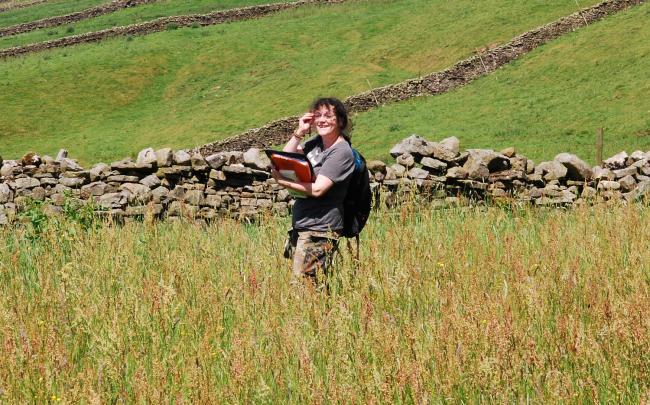
Hi, I am Rima Berry. I am an aspiring Manager working in rural economic and community regeneration. This blog is to document my travels and research as a 2019/20 Winston Churchill Memorial Trust Fellow.
I have been working in community/economic regeneration for over 30 years, both as a freelance consultant and as an employee. I’m currently employed by YDMT (Yorkshire Dales Millennium Trust) as the Programme Co-ordinator for the Yorkshire Dales LEADER Programme. We have given out nearly £8 million in rural grants since 2007 over the rural Yorkshire Dales.
On my travels through the USA I will be researching how organisations can get better at supporting rural community land ownership in the UK for the social, economic and environmental good of all members of rural society. Equitable community development is my watch word.
I will be visiting the pioneer organisations who started the Community Land Trust movement, tested it and are living it.
This research is important for us in the UK, because protected landscapes and national parks not only conserve habitats , they conserve cultural values too; the communities and people who maintain the farmed landscape. If we let our communities “drift” apart, we lose the very experiences which are the foundation of why the landscapes were designated.
My research will centre on innovation in public sector partnerships, awareness of the social benefits of community land trusts, and particularly how they boost individual and community equity.
I will look at how the Community Land Trusts in the States create foundations for more equitable development and better opportunities for low income home ownership.
Equitable community development in rural areas… I’m on a mission indeed.
Views in this blog are my own and in no way represent the opinions of the Winston Churchill Memorial Trust, the UK Government or my employer (YDMT).
I swear it was Christmas last time I walked out of my front door. Phase 2 of my Winston Churchill Memorial Trust Fellowship is upon me like a freight train. Time is speeding up. Departure in 10 days. Smart clothes ironed, suitcase packed and weighed, routes, times confirmed and the handover of “day” work to my generous co-workers is nearly complete. (I could hug them but it’s not allowed anymore).
In the midst of COVID-19 pandemic, I optimistically look forward to the Arizona desert heat, driving through the red rocks of Sedona, Tuscon, Phoenix and Flagstaff, meeting Community Land Trust leaders who hold and move forward the dream of equitable development.
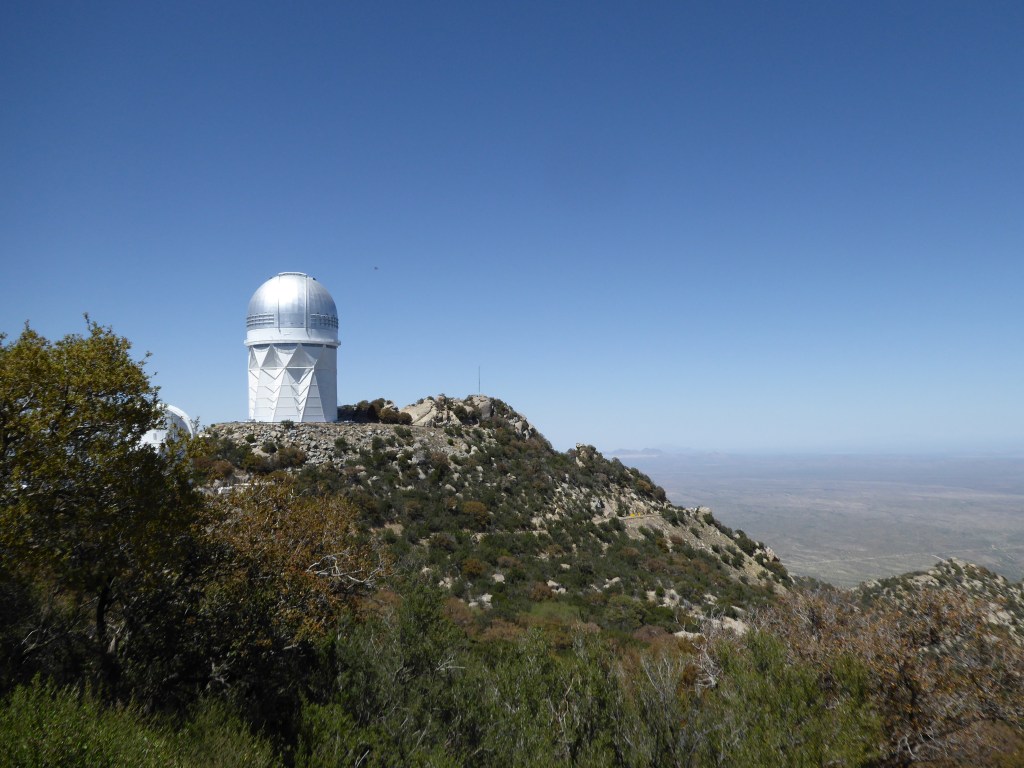
Kitt Peak National Observatory, (RB, 2017)
If the US borders close, I have a pile of reports, lesson, project plans, a Community Toolkit and a book to finish writing, a year of ideas to turn into sketches, years of sketches to turn into paintings, a half knitted Latvian hat, new views to discover and a garden gathering dust. I don’t worry about things I have no control over.
Though it would be nice to leave my home behind for a while…2020 rocketed in on a wave of personal housing chaos; the roof leak in my bedroom celebrated it’s first birthday, the ceiling blew out and my social housing landlord cites lack of funds. I email my landlord to suggest they revisit their risk and long-term asset management strategy; maybe there’s a job opening…I don’t hear back…
Aren’t there regulations to stop Registered Provider landlords (like Housing Associations/Local Authorities) gathering rent and not paying repairs? Well yes…and no.
The Consumer Standards are there to ensure tenants have good quality accommodation, are safe in their homes. However, the Regulator of Social Housing uses the enforcement powers reactively, where it believes there has been or may be a serious “detriment” to tenants. They are more like guidelines…which no-one checks.
There was rumour of strengthening the regulation of the Consumer Standards after the Grenfell Tower tragedy. How awful that after nearly three years there is still no new Consumer Regulator with teeth. Heartbreaking. My chaos – just a roof leak. I’m thankful for other rooms to live in safely.
And I optimistically look forward to the Arizona desert heat…10 days and counting…
Phase 1 of my journey is completed; I’m surrounded by scribbles, papers and data.
I am hugely grateful to colleagues who filled in for my “day job” and especially those who supported me in the dark week when jet lag, depression, disaster and climate nearly …nearly… dimmed the lights.
I feel privileged and valued to have been entrusted with the task that I decided must be done no matter the challenges ahead. It is a working Fellowship and the choice to haul around a tent and sleeping bag was a personal one.
That choice defined and added a dimension to my journey beyond all expectations.
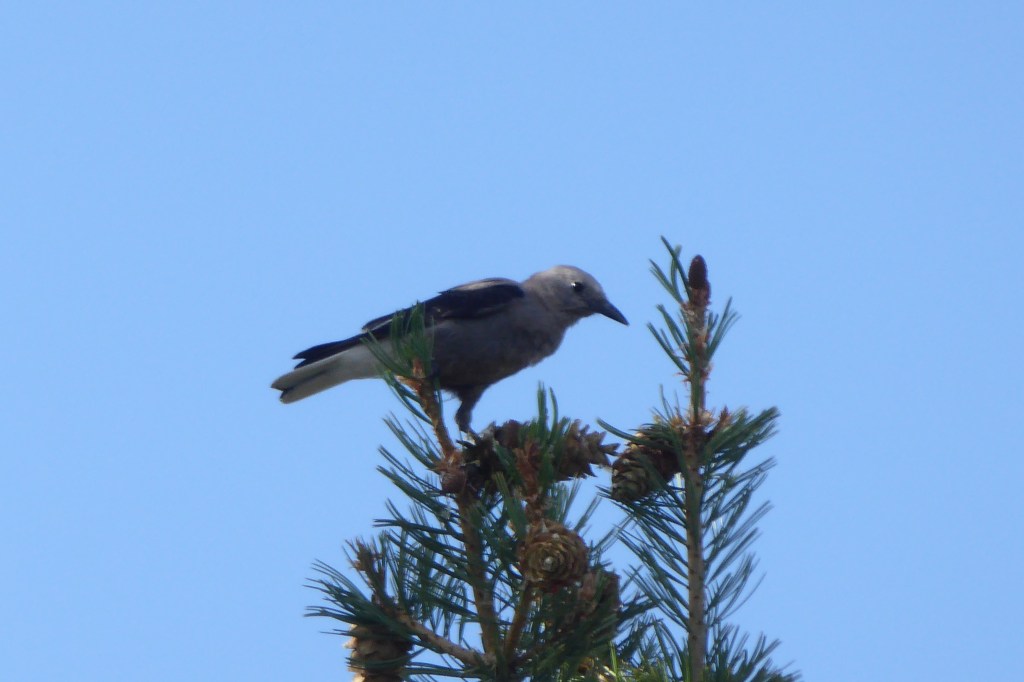
I have lain under the Milky Way in a cold lava field in Idaho, listened to coyotes howling in the distance, surrounded by inky blackness. I walked amongst an explosion of Clark’s Nutcrackers, a keystone species and prolific avian forester (burying over 100,000 seeds a year!).
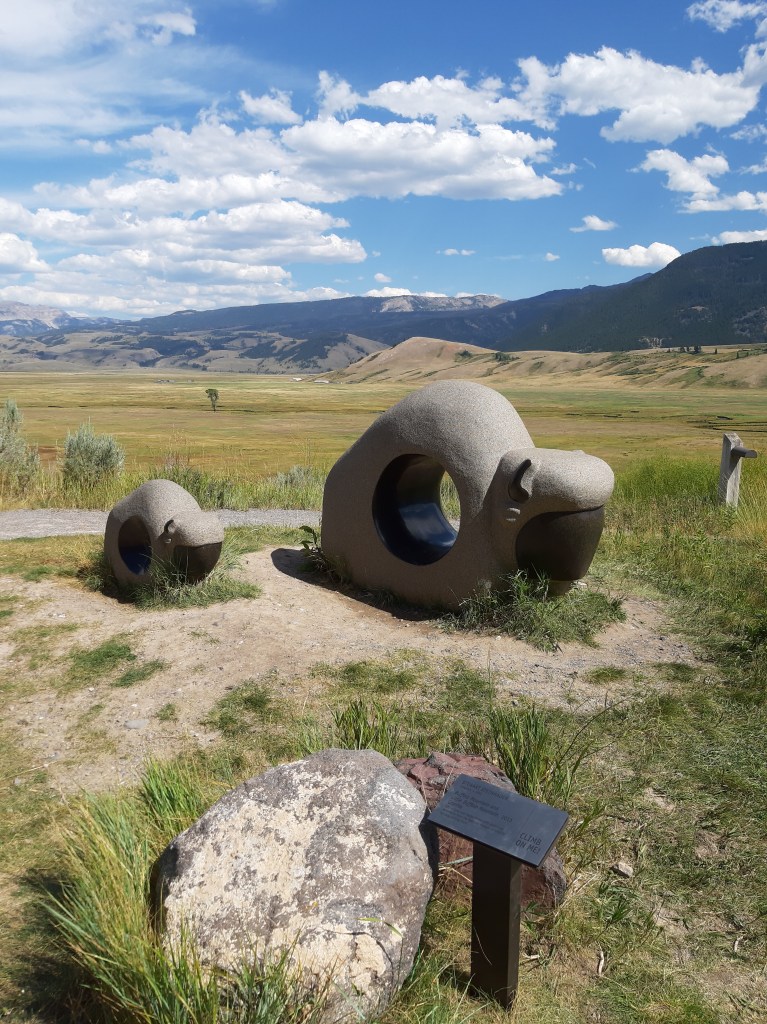
I found Bison hiding in the grassland and heard a lone Common Loon calling from a kettle pond in a forest.
I’ve been surrounded by Blue Birds, Dragonflies, Mosquitoes, spider webs and Blue Jays.
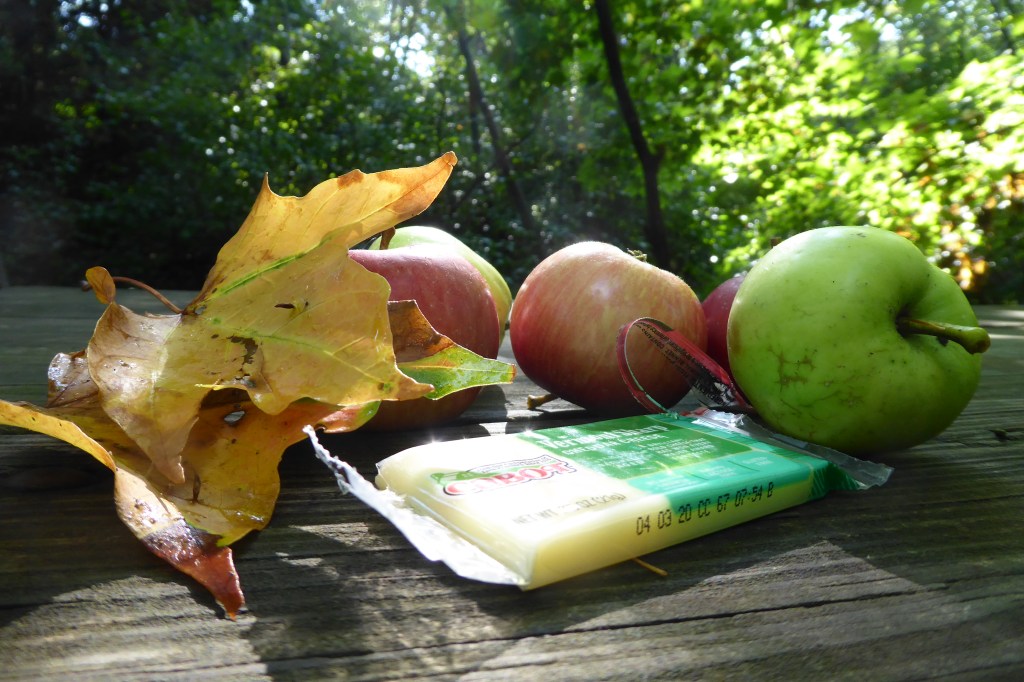
Picked wild apples, field mushrooms, Chicken of the Woods and blueberries. Was given lush, garden fresh, tomatoes and cucumbers.
I’ve met warm and welcoming people, not always the ones I had travelled to meet. Found a love for marshmallows cooked on a campfire. Tried, and largely failed, to capture the fragility of the Monarchs as they seemed to follow me on my journey through North Carolina, Vermont, Wyoming, Maine, and Massachusetts.
Each day brought a new horizon; was, and is, treasured as a gift. The journey was not smooth, there were tears and fears, it was challenging on any level you care to imagine. Possibly on some you can’t.
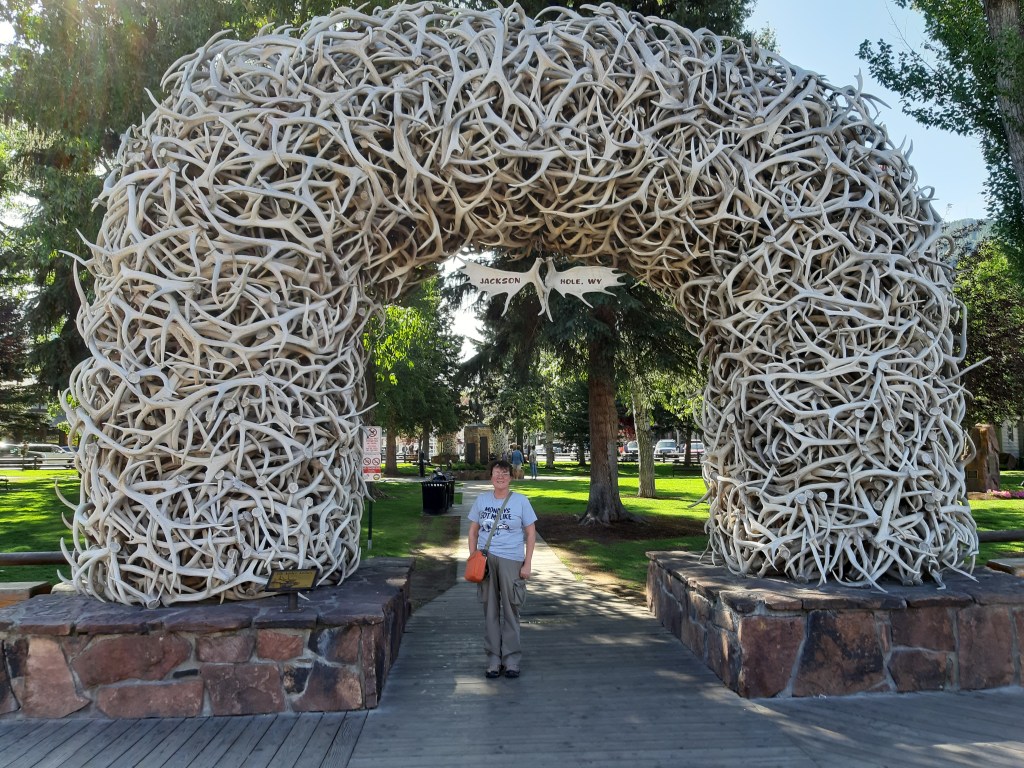
Somewhere between waving at the webcam on Jackson Hole main street, chatting to all and sundry and driving 5 hours across the Idaho Plains, with sudden clarity I realised that whilst I may be working, my spirit was on a transformational holiday.
My favourite spot for picking up a Network connection
You’ll understand that to relate 42 experiences (my travelling days) would be long and meaningless (…I can still hear someone asking why there was a Chicken in the Woods…). So alongside my Winston Churchill Fellowship Report in 2020, there will be a photo booklet, showing the personal journey, through my eyes.
I had a blast, I loved it, and I hope I will never be the same person I was when I set out. “Life-changing” is the only way to describe the effect the past 6 weeks have had.
So I blew into Maine, the Pine Tree State, just ahead of Dorian, now downgraded from Hurricane to Tropical Storm. True to form, (just call me “Jonah of the Airwaves”), my flight from Burlington, Vermont was delayed with knock-on effects on rapidly filling connections to Bangor, Maine. It became a mad rush to avoid a night in Bangor Airport, as my case arrived before me, one of life’s mysteries – if my case gets the flight, why couldn’t I be on it too? Another incident where it would have been quicker and less stress to drive.
Overhearing fellow travellers ordering the rental shuttle (bang on closing time), I stuck to them like glue. The car rental company got 2 customers for the price of 1.
I drove off into the twilight in a fabulous Nissan Versa (barely 1900 on the clock), hellbent on reaching the campground I’d cancelled only that morning. Everyone was looking to find home. And I turned into the guy who rocked up at a campground just as everyone else would be bunking down.
Mount Desert Island; the name a reflection of it’s bare treeless mountain summits. It is home to the type of community not dissimilar to that of Marthas Vineyard in Massachusetts, or any other remote rural area with stunning scenery. It covers 108 square miles, of which 76 are protected by the Acadia National Park. There are four Townships on the Island, a resident population of 10,615 and 3.5 million visitors in 2018, attracted to the rugged wooded interior, lakes and Atlantic coastline.
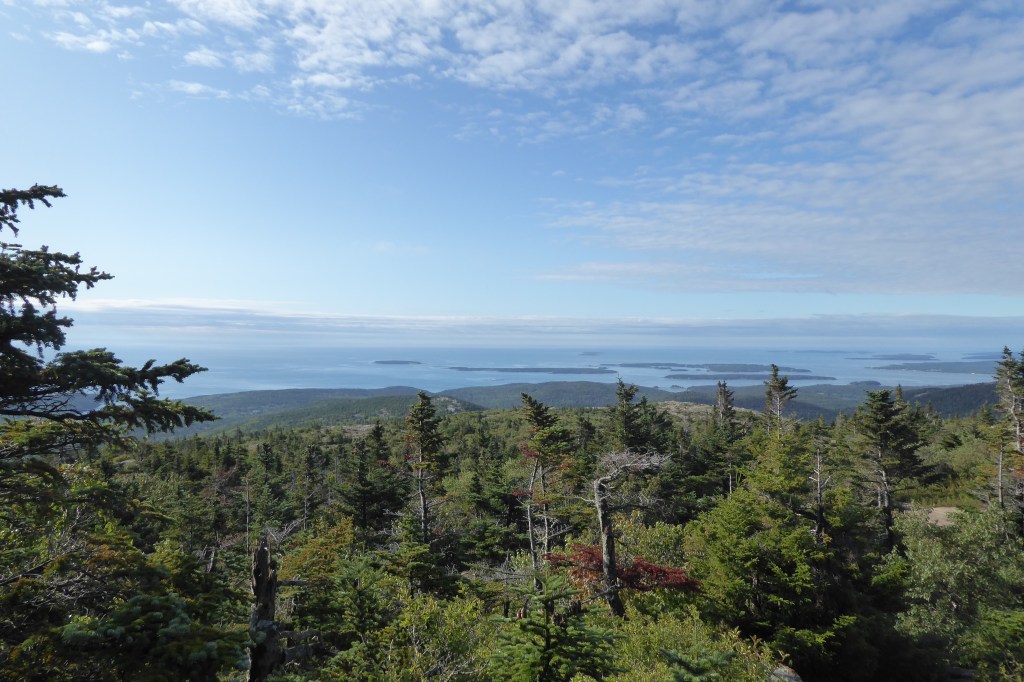
From Cadillac Mountain
Cadillac Mountain is famed for being one of three places in mainland US to see the first sunrise on most mornings. It’s a prime place to view migrating raptors (birds of prey).
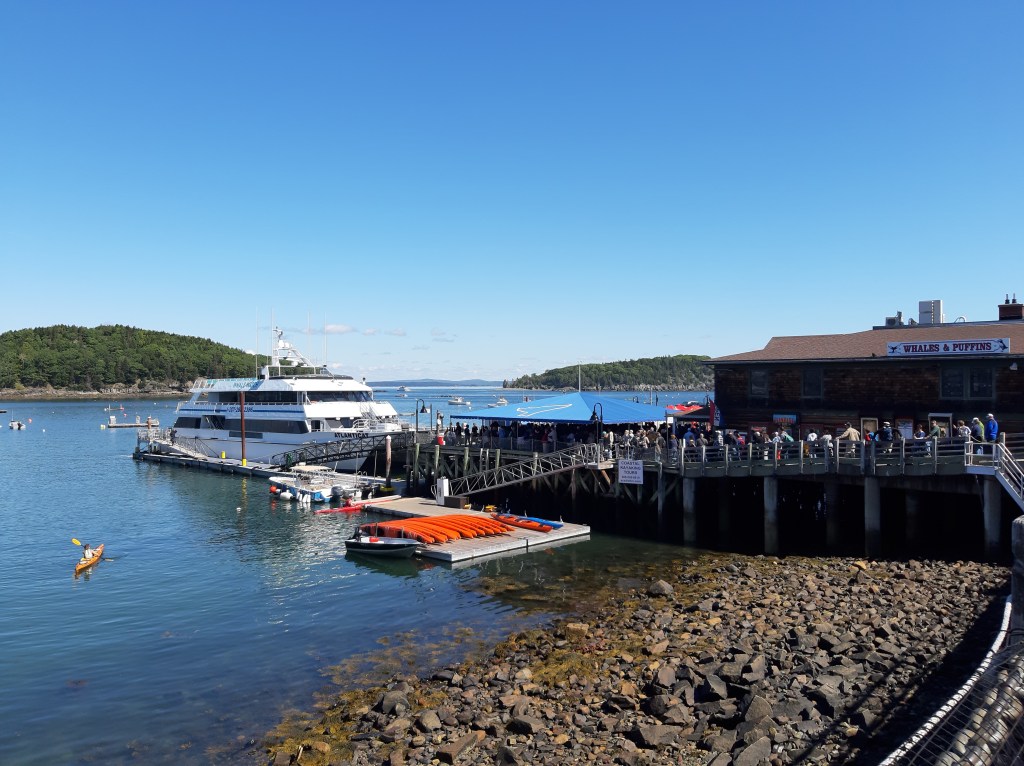
Bar Harbor, the largest town, welcomes over 180 cruise ships in the tourist season. As a result of the hurricane there were four in at once as I arrived, their numbers quadrupling the towns population. There is simmering controversy on the congestion caused by visitor traffic. A free but seasonal shuttle bus service connects the Island hot-spots.
Passengers for Whale watching at Bar Harbor
We enter ground hog day.
This is a desirable place to be, to own a summer home in the shadow of a National Park, for property investment. Supply of housing and year-round rental stock is dwindling. 36% of the housing is seasonal only.
As with every other tourist area, the AirBnB market is shifting rentals from long term to short-term higher returns. Employers are struggling to house and retain seasonal workers and key workers in public services.
Housing costs have inflated beyond the resident income levels; in 2016 the estimated median household income was $60,295 ($40,539 per capita). With a median house value of $392,135, this translates into 78% of households unable to afford a mortgage.
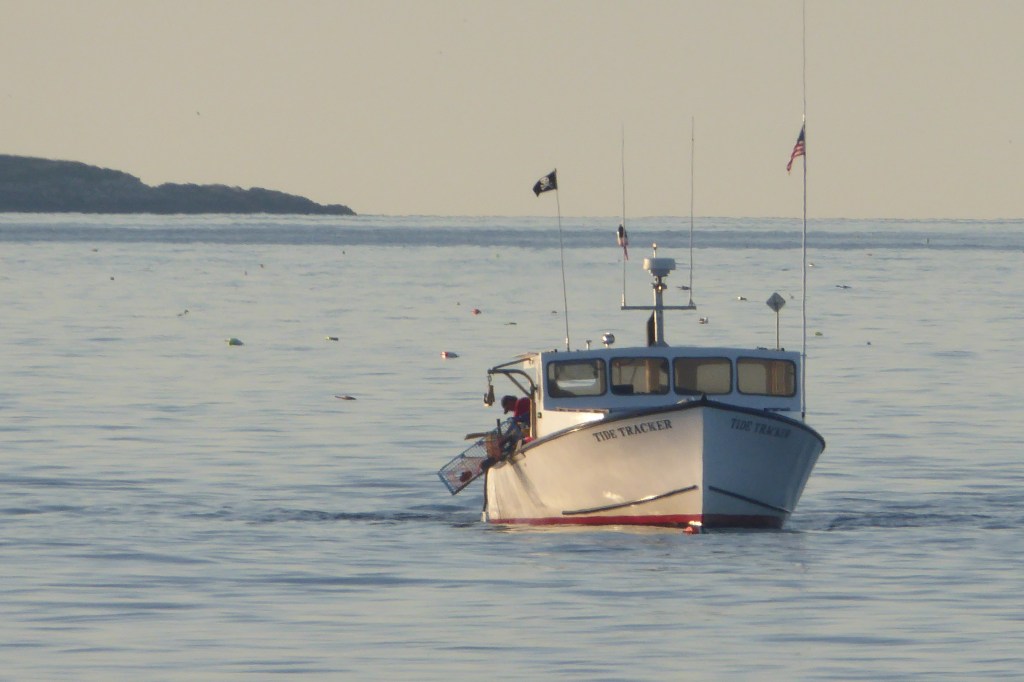
Lobsterman at Seawall
54% of workers on the Island live off the Island, an indicator of the affordability gap.
The age profile that makes up the fabric of the Island community is skewed towards the 50-70 year old group and the resident population is steadily declining, affecting the viability of community services. The elementary and middle schools have declining numbers; one school by over 25% in the past 10 years. Not all schools will be open in the next 10 years.
Young people cannot afford to stay resident in Mount Desert
Island, where they have grown up, with generations of knowledge about the
landscape, history, flora, fauna, customs. They are leaving.
The Island Housing Trust has been working with communities on Mount Desert since 1989 to reverse the depopulation trend, in a stunning location where competition for housing space and short-term gain is fierce. The waiting list for their properties is extensive.
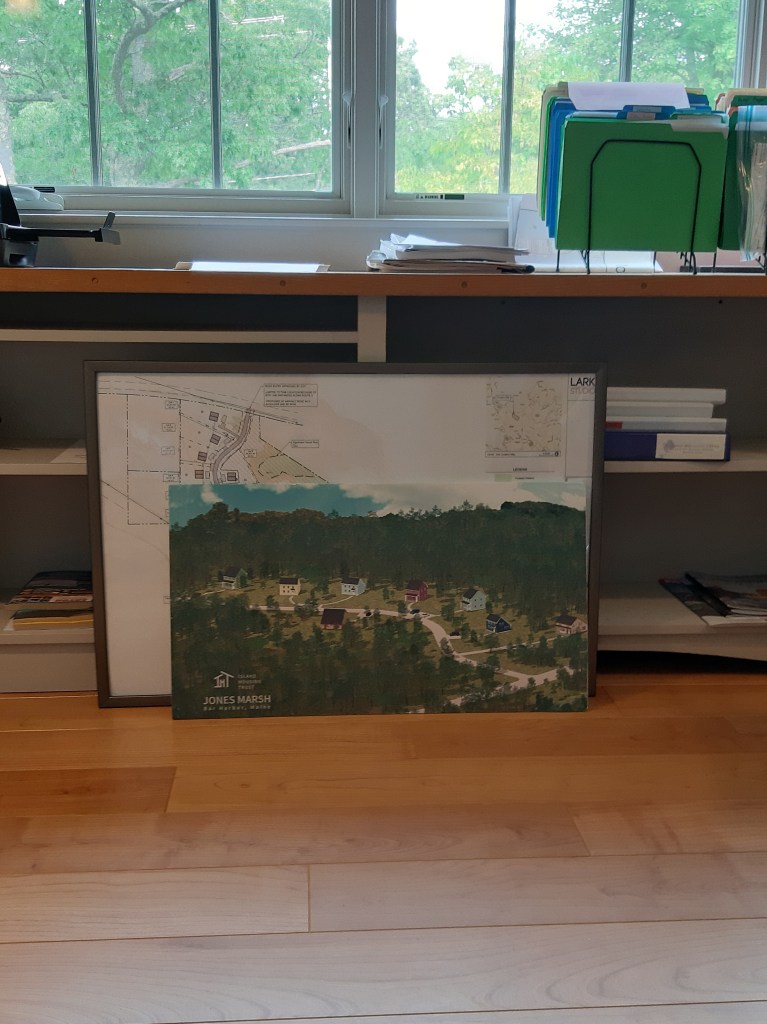
Breaking ground on new project @Island Housing Trust
Alongside the townships, there are lost landscapes here; where once there was hay meadow, salt meadow, peat bogs and commercial orchards there is now woodland and remnant pockets.
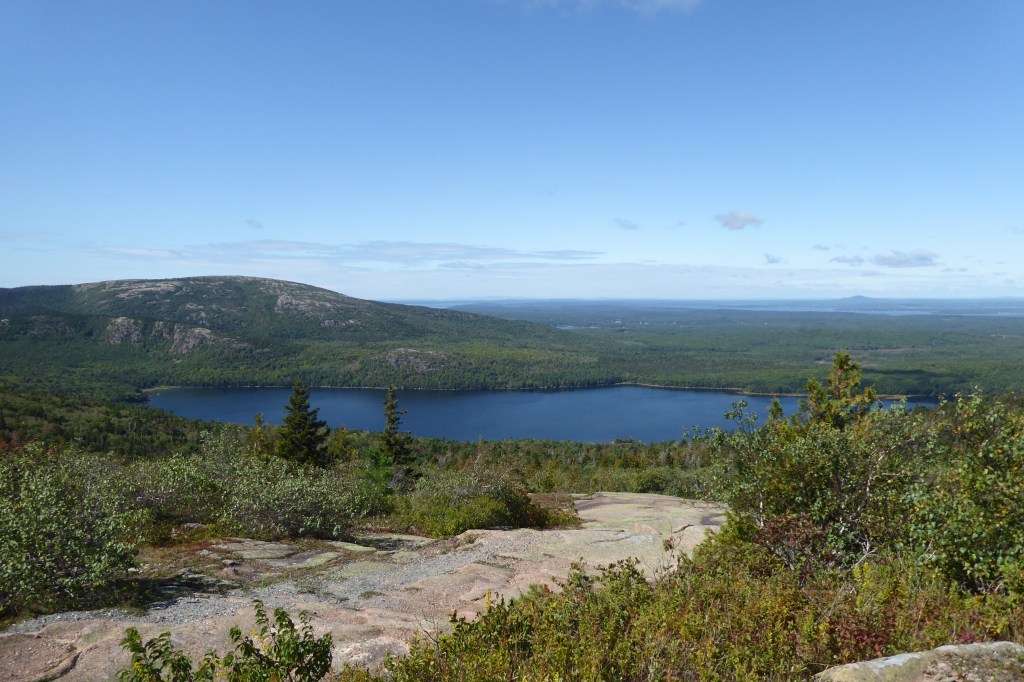
Eagle Lake, Acadia National Park
The National Park system in the US is, in the majority, focused on maintaining or creating wilderness models. Mount Desert is definitely wild, but has never been wilderness and in Acadia they neglect the historical and ecological value of the managed agricultural landscape. Without people the culture and heritage of an area becomes two dimensional; narrative on an information board.
I am reminded of visiting the Big Bend National Park in Texas and the growing horror at realising the so-called ruined farmstead I was fascinated by was not a product of time, but of an eco-facist approach to conserving landscape above community. People became conservation refugees and an area lost the soul of it’s culture.
Young people cannot afford to stay resident in the Yorkshire Dales, where they have grown up, with generations of knowledge about the landscape, history, flora, fauna, customs. They are leaving and we all have the responsibility to consider the human cost of living in a National Park and the reality of our vision for the future.
To understand this post, some background. I have a thing about sleeping in beds that other people have slept in; I’ll opt for the floor or lie on top of the duvet. And I get up early.
For this reason, I have camped all but 4 nights of my Fellowship travels. I’ve slept under the skies of the best rural areas in the States and been privileged to see some stunning dark skies, fauna and flora. I’ve only stopped in motels when forced to, when late arrival at destinations would mean turning up a campground at nearly 11pm, well no-one wants to be that guy…
One of the many daily photos I bored the family with of MY home for the night.
So I was complacent finding myself late in my last week of travels; after 14 hours travel I needed sleep, and checked into the first typical motel I saw on a dark road.
There were warning signs: the door lock took me ages to unlock (and looked like it had been forced in recent history) ; neighbouring rooms were full of resident families not on holiday; the carpet looked suspect – I didn’t fancy sleeping on it. I opted for the bed and leaving the lights on…
We’ve all seen those movies… I have
too. It proves you are never too old to live and learn.
Sometime after 2am I shot wide awake with a feeling of being watched…to see a little bug on my pillow. I flicked it off before thinking. Then I saw another one on the duvet. My reaction? Flicked it off too, and reached for Google.
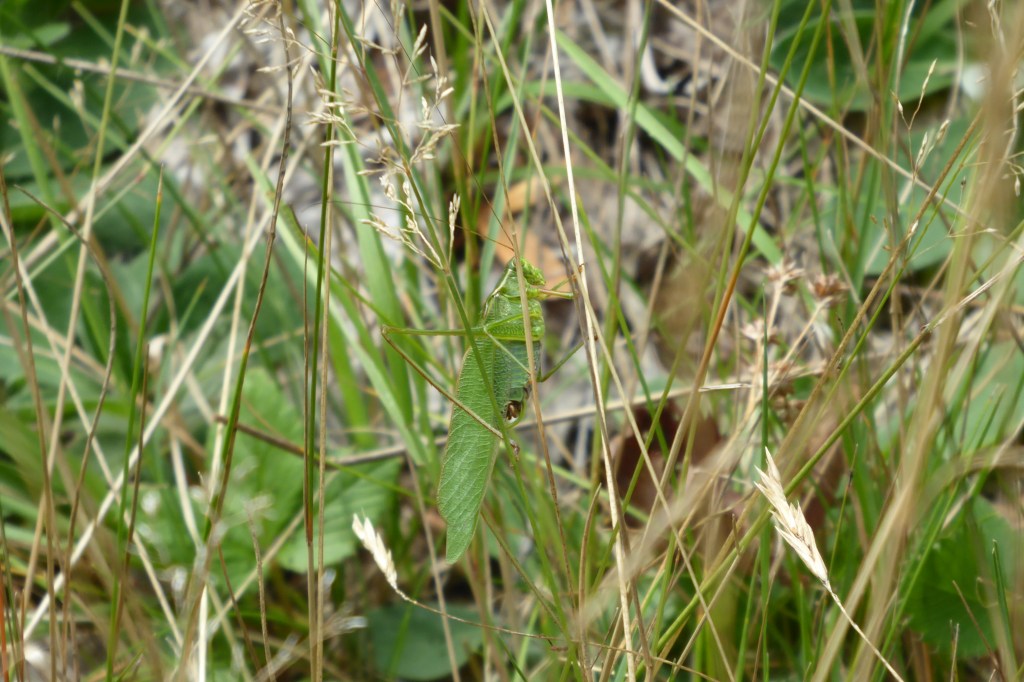
Just to prove I like bugs
Before I could read very far I noticed another, waving its legs at me on the night stand. Either that’s the same one very determined to get onto the bed, or that makes three. Three too many, I smooshed it. Sorry.
Google was not reassurring; neither was the smooshed insect, with it’s resemblance to a hungry bed-bug… I packed. I have never cleared belongings into a car so quickly.
No really – I like bugs
But I had a dilemma as I had to lock the room (in case someone came in and messed it up). After a minute or so, trying to be ultra quiet the door finally locked.
I then heard the “click, click, click,” of claws padding down the motel sidewalk. Sounding just like a small dog. Except at 3 in the morning a small dog alone is bad news…
What followed was easily the most farcical moment of my whole travels….maybe my life…from swiftly packing to leave the room, mentally shrieking;
“Let me out of here now! Ewww!”,
I turned around and there was a huge skunk ambling towards me, not 6 feet away, bad eyesight, totally oblivious I was there! I found myself frantically trying to get back IN the room…
“Let me in! Let me in!!”
The door opened, light flooded onto the blacktop and the skunk ran off…I don’t think I could have mentally survived both skunk and bugs in one night.
Safely in the rental car; where do you go to sleep at 3am in the rural Berkshires. Imagine 3am in the Yorkshire Dales; where would you go if you had no friends, no hotels open (seriously? Its 3 in the morning..) and roadside parking is no option? Where indeed.
I decamped to my only option – the nearest Walmart parking lot. By 4am I’d said hello/goodnight to loved ones and was fast asleep under the CCTV cameras. I was not alone; there must have been 20 cars in the lot. I don’t know how many people were like me; (traveling as opposed to escaping bugs at 3 am), but I observed more than a few getting ready for work, from vehicles full of household goods.
It got me thinking about the recent article I had been reading. The U.S. Department of Housing and Urban Development, HUD, use a Point in Time count on family and youth homeless in the USA, based on numbers in shelters or on the streets on a night in January. They report there has been a 23% drop since 2007 in families and young people experiencing homelessness.
So if you sleep in your car, or in your storage rental container, you are not homeless. If you are staying with friends, you are not homeless. If your family are temporarily in a motel – as were my neighbours – you are not homeless. What a crazy methodology to consider sound.
As dawn broke, I trotted across the parking lot into Walmart reflecting on what I’d learnt:
It is really uncomfortable having no control over your own personal/ecological security or night-time sleeping arrangements.
If a motel floor doesn’t look clean enough to sleep on, walk away…fast.
I’m lucky, I had a choice.
In January 2018, Massachusetts (my current location) had an estimated 20,068 experiencing homelessness on any given day. That was according to Point in Time data.
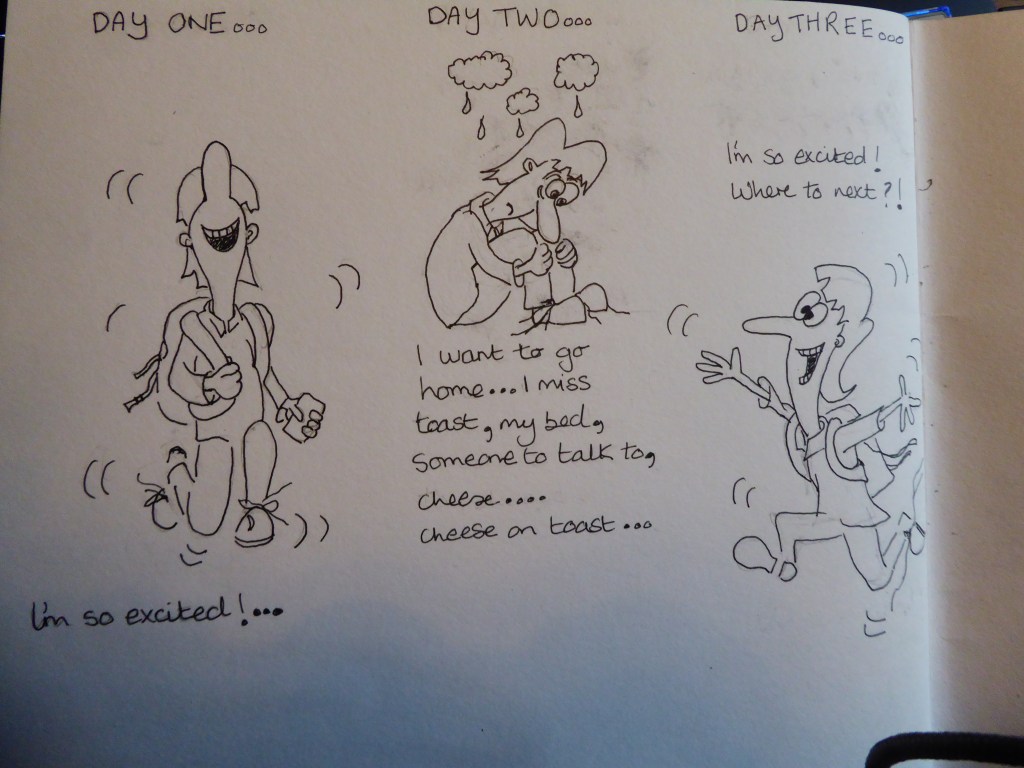
So part of the travelling Fellowship involves “down-time”. Time to reflect, take on board the views (scenery), adjust to time zones…
I’m not very good at “down-time”, there’s always something new on the horizon. A glance at the balance of my time-sheet showed a need for more serious editing and down-time (note no punctuation now).
So I traveled the Island of Martha’s Vineyard, Massachusetts, on the buses to see what the horizon would bring me. At this point imagine someone just hopping off and on buses flagged down in random places and you will not be far wrong from the reality.
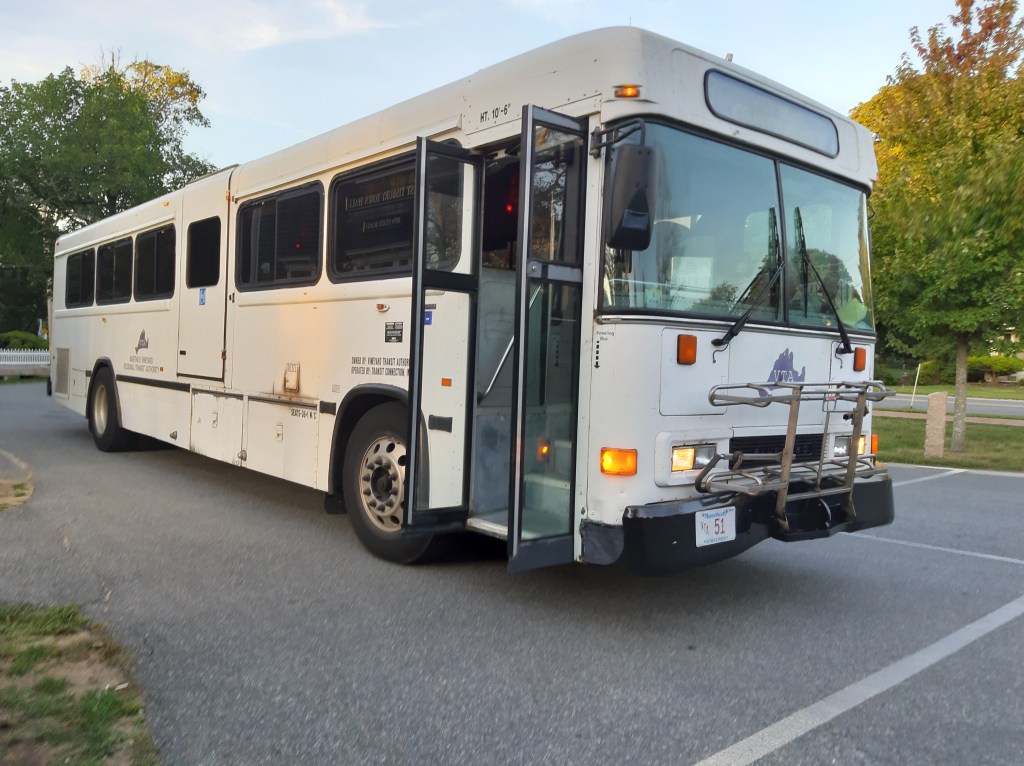
Note cool bikes carrier…
Mention housing and community to any local you meet. I dare you to discover what their opinion or reality is.
What do Fishermen and Farmers have in common?
They never retire. I met a semi-retired Menemsha Fisherman at his shack; he can trace 11 generations back on the Island (no names to preserve privacy), has raised 4 children who have all left for their own lives. Housing and Community is a big concern for resident islanders; he shakes his head.
We chat as visitors and cars stream around us; the cafe will close at 3pm when the visitors leave, the restaurant, (too pricey for locals to eat at, however offering good wages to work for), lies empty as the high season has finished. He freely shares that when he was involved in local politics he would have liked to see a two tier attitude towards housing, with year round residents favoured . The summer residents were fiercely opposed and remain so today.
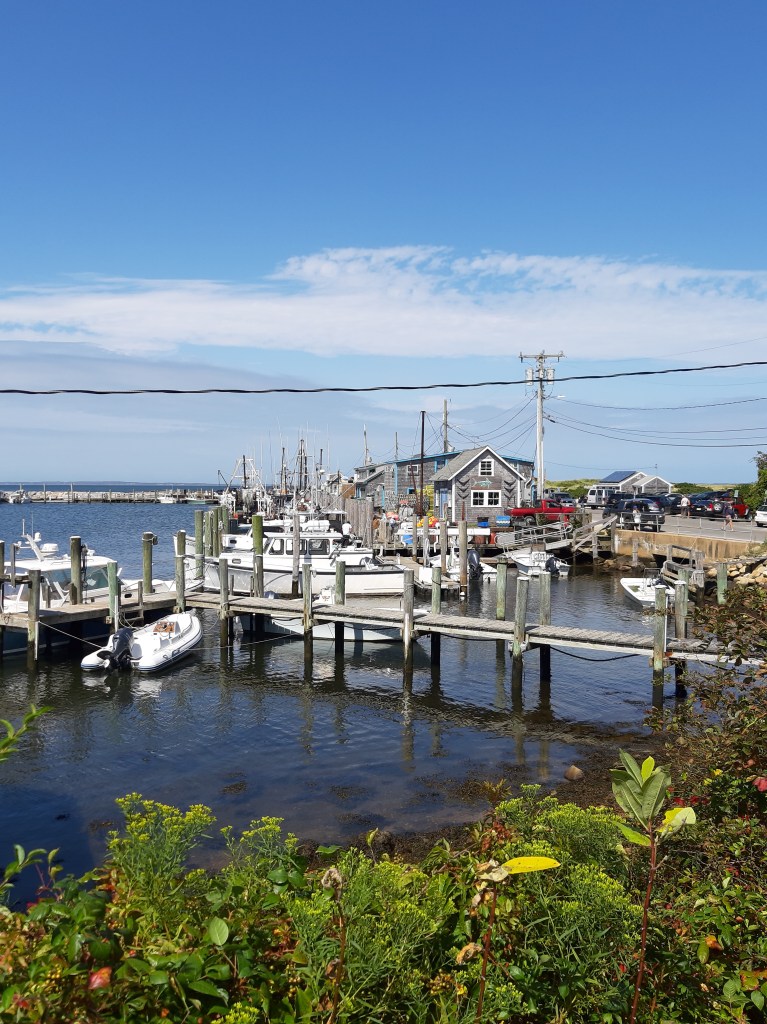
Menemsha (aka location of Quints Shack in the movie Jaws, 1974)
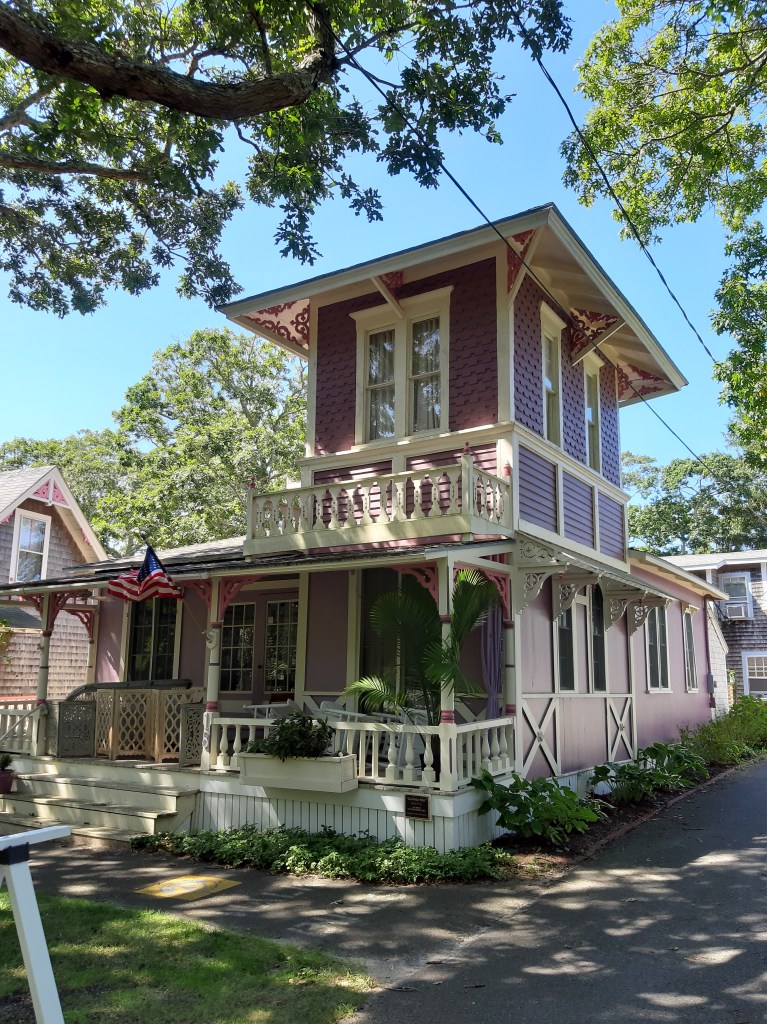
I met a seasonal driver who owns a gingerbread house (more on these later), and lives here for the summer. One of these tiny but unique 19th century homes typically starts at $500,000.
In Oak Bluffs
Hotels have seasonal staff and provide accommodation; cost of living here is a hot topic (even island gas tops $3.70/gallon, a full dollar more than I’ve seen anywhere else in the US).
A driver who confirmed homelessness was an issue; families lived in the woods, the church does what they can.
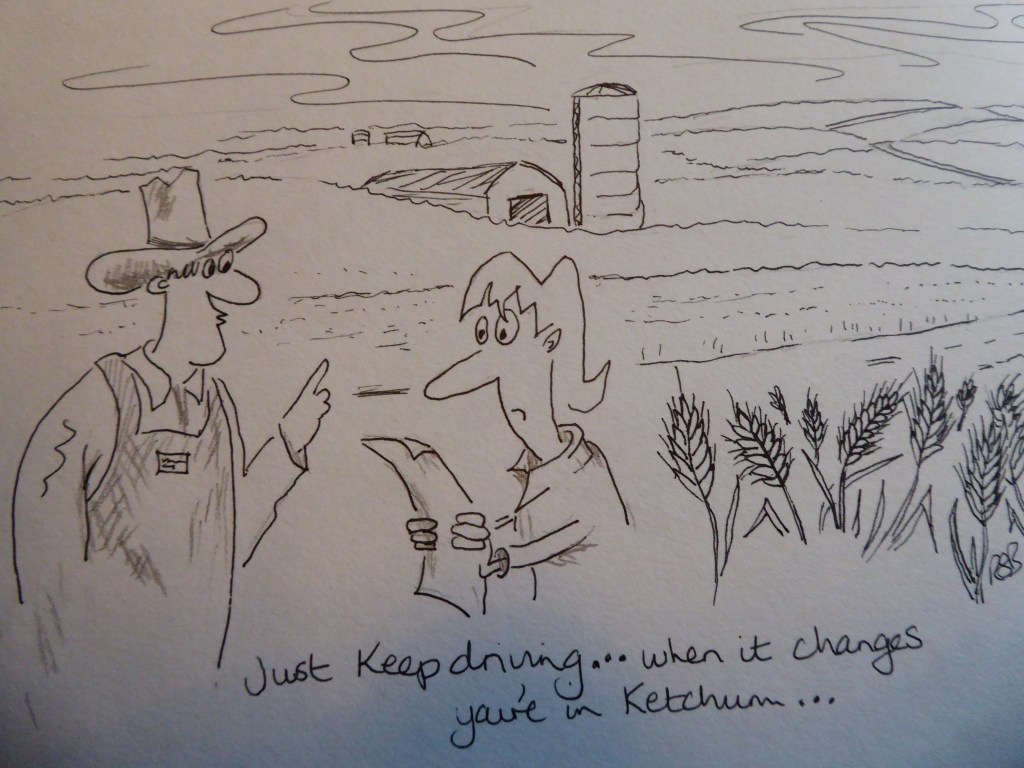
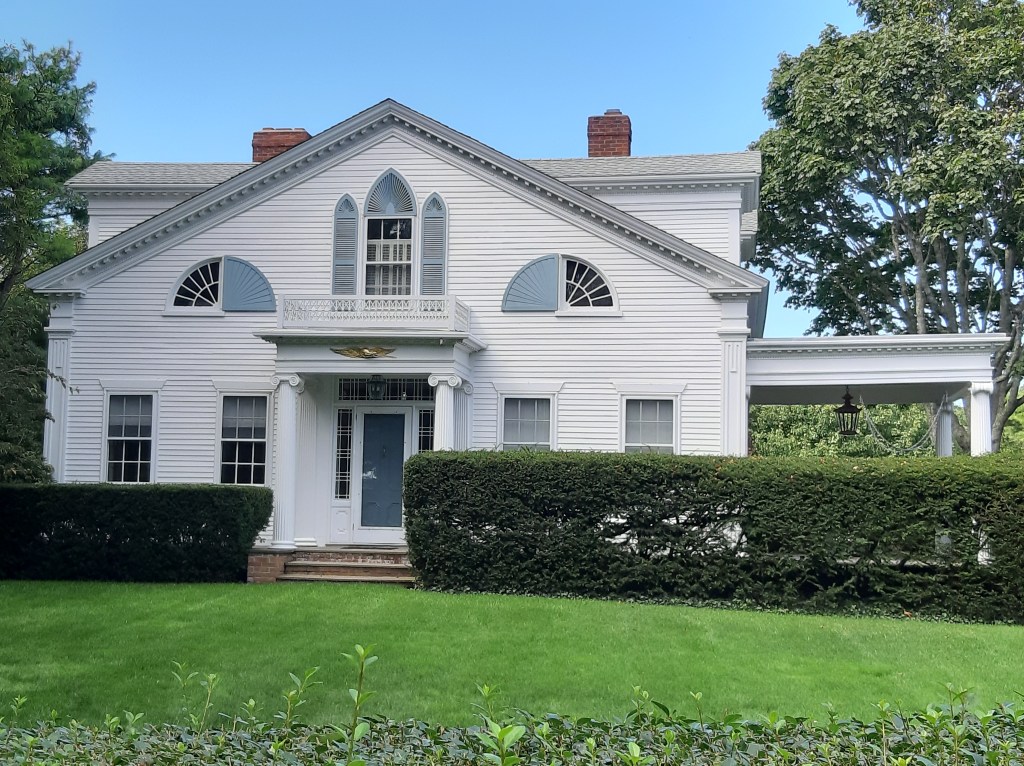
Celebrity status has an impact. Houses in Edgartown, prime locations, go for $15 million plus. The Obama’s have just bought an Island House; everyone’s real estate is set to rise. Much as it did in Ketchum (Idaho) when Tom Hanks moved in, or Snake River (Wyoming) with Harrison Ford. For the record, I’m not a celebrity stalker…though I did drive past Tom Hank’s driveway 4 times…
Edgar Town property
A native worker struggling to get work that will pay the bills this winter; out of season there are not many jobs to go round.
An ex-local on holiday here who had to move away because they could not afford to live here even seasonally. They had tried for 8 years.
A full time resident writer who “hops” from rental to rental; housing is a constant worry, but he is pragmatic about it. Air BnB has a lot to answer for internationally as the reason why the rental market has shrunk hugely. Housing is a conundrum, he states. Too right. He’s currently writing about the hidden homelessness, people living in chicken shacks. I give him my card so I can follow the story.
I was told it’s not a “depressed or deprived” island, if you want to work there are plenty of jobs. I’m not sure everyone I met in my downtime would agree. But that’s what opinions are, specific perspectives.
The picture at Martha’s Vineyard is not as rosy under the surface. For most life is hard. Resident rural communities are struggling against a tide of inequity and affluence they cannot rise with; like boats anchored to the seafloor in a rising tide.
Well they did say take in the views in down-time.
By twilight, I felt like I’d lived a Ground Hog day without actually seeing one.
Every politician and public/voluntary sector worker involved in providing housing for the community, should try it out for themselves first before feeling self-satisfied and patting themselves publicly (and each other!) on the back for a job well done. Have you really done the best for your community or just papered over a leak in the hull?
My opinion? Ask, Listen. Take the bus . #walkamileinmyshoes
” You went for a shower & as you showered the mossies were getting you – despite the netting door – yep, I’m at Carolina Beach drenched in 7% Deet and still getting eaten!
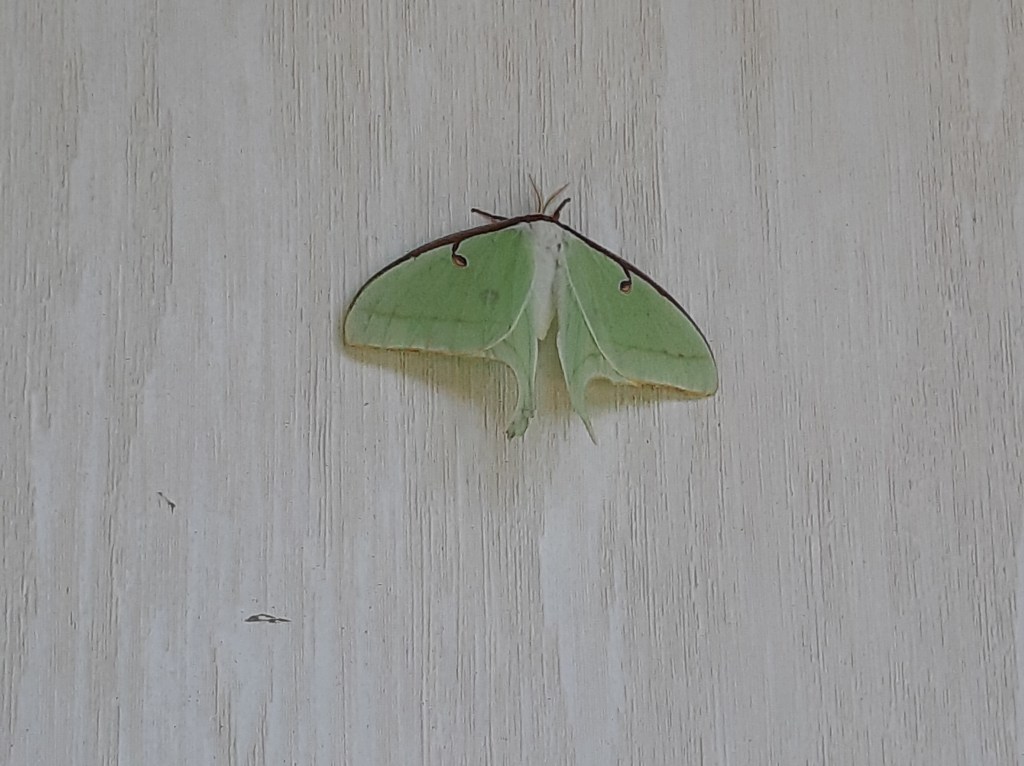
Drove from Jordan Lake to here today; 3 1/2 hrs. Saw Brown Pelican, Fiddler Crabs, Lunar moths, some diddy deer and sandunes full of pine.
Lunar Moth
Fab place, tired out, very hungry. Ate a jar of 5 pickled eggs – yes, just call me Paul Newman.
At least I’m here – took wrong turnings twice (“sat-nav” aka phone, kept falling over). I’m re-applying mossie spray all the time…I think I’m just giving them a shower…I need some more spray.
Did I mention I’m hungry? Paul Newman had 30 eggs.. ” And so night falls on another day…
My enduring memory of North Carolina (as I prepared to leave it) and advice to fellow Churchill travelers?
I feel humbled at being welcomed so readily by two very different Land Trusts. Take gifts to say “thankyou” for the time your hosts give you. I invested in Churchill Crowns (of course, you can only order 10) and I topped up gifts with lots of Yorkshire Dales T Shirts (my own company), a myriad of hand-made rope products from local firm Hawes Ropemakers (Outhwaites Ltd, made by bestie Caroline) and some gifts from YDMT.
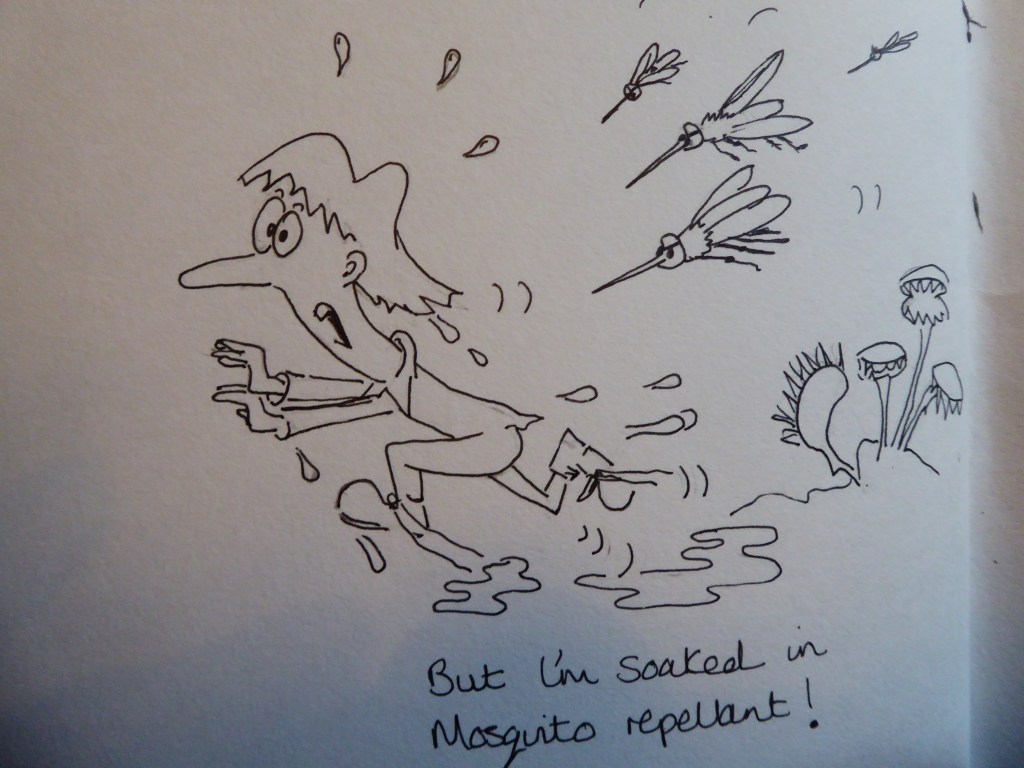
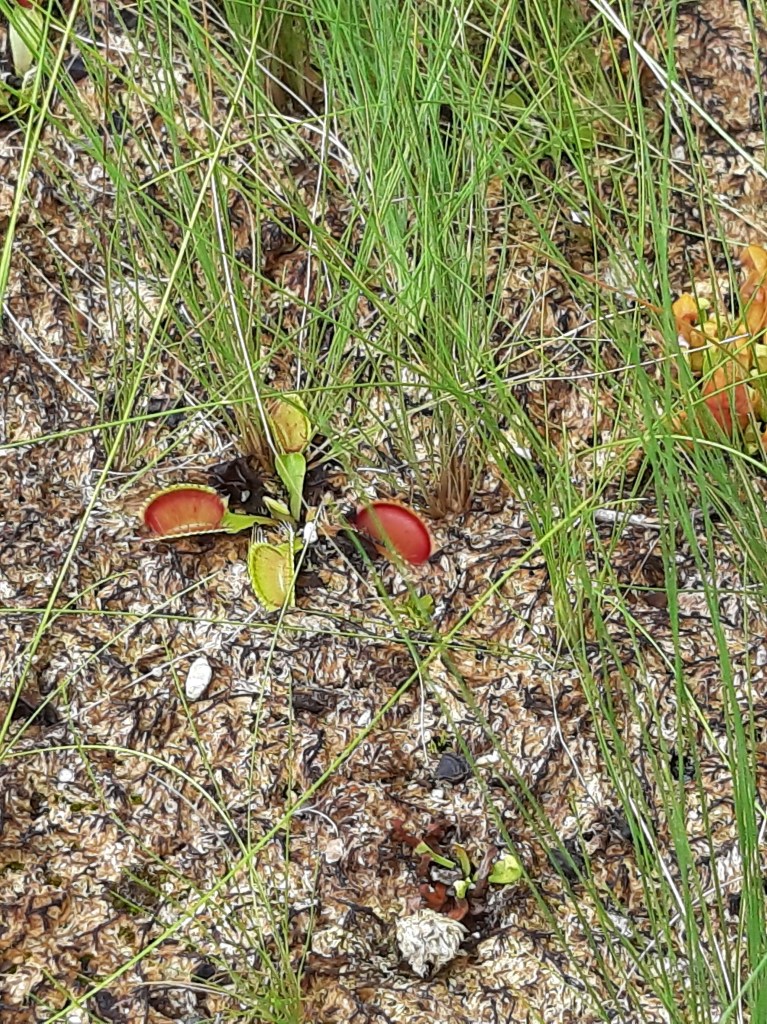
Use Cutter Backwoods Spray if you camp – anything else and mosquitos are just lining up for a makeover. No apologies for the endorsement; I set out to find the only colony of wild Venus Flytrap in the world in 7% Deet spray and became buffet for the mosquito population of Carolina Beach State Park… major mistake.
It takes me 24 hours to leave North Carolina by plane.
I didn’t think I’d miss information technology. IT is over-rated. How we fool ourselves.
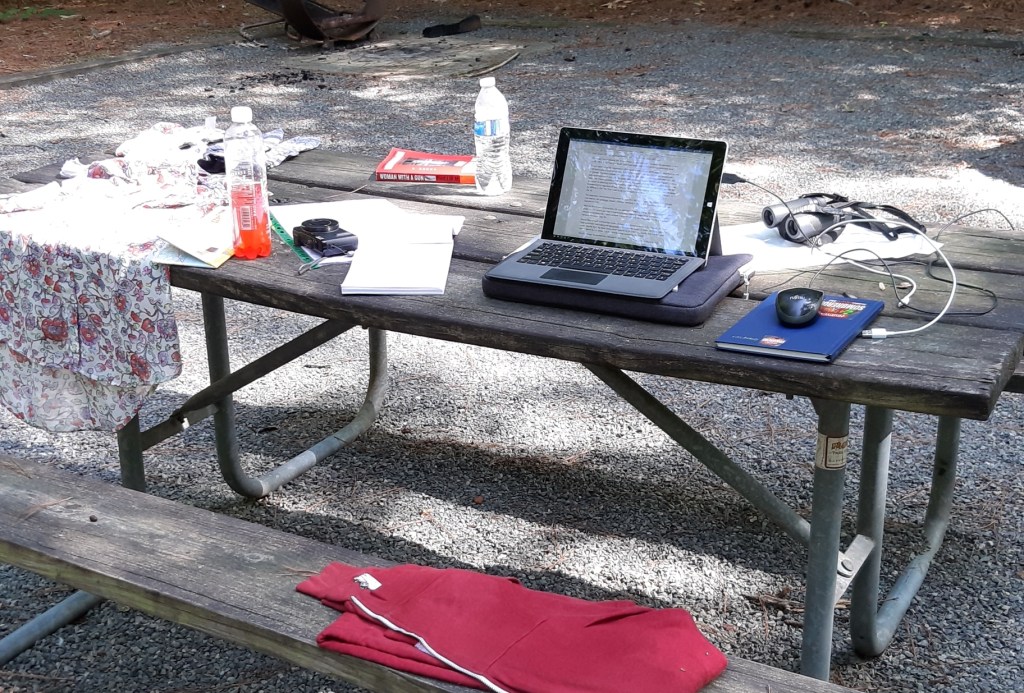
My lovely (lightweight) IT notebook failed to boot.
After a brief (few days of) meltdown, ranting and general bad temper, I got over myself, pulled out paper and pen and got on with it. I blame the humid heat and the fact when I woke up my hand was still fanning air on my face …for my temper, not the boot failure.
My “office” with working IT (the day before)
I also discovered a recording App. It provided endless entertainment in the insomniac hours as my body clock failed to adjust to changing time zones every week. More later.
Wilmington (even hotter than Chapel Hill, despite the odd downpour) is home to the office of Cape Fear Community Land Trust. Cape Fear is a popular coastal plain tourist destination, home to population of 42,715 and a median household income of $49,898.00. Rental market is highly priced.
Started 10 years ago (relatively young), with support from the City of Wilmington, the Land Trust has build 8 homes in partnership, owning the land, purchased and renovated three for rental and is poised to hear about a major partnership development on a derelict site which will provide more rental homes.
The current model is to use bank loans to purchase and renovate property for rent, under the Community Reinvestment Act. Rentals are more the immediate need at community level, but also support the Land Trust income.
Executive Director Paul Stavovy has worked in housing for 20 years, and still does. Time is in short supply and co-ordinating funding is time consuming. With only one part-time member of staff (himself) and 11 board members, the Trust has focused on bank loans as the vehicle for finance, with plans to expand into sponsorship this year. Although a non-profit organization, it accesses loans in a traditional fashion and performs well as a business.
The CLTs are shaped by the background of their Boards and their CEOs. Cape Fear is led by a self employed entrepreneur in Paul; if one mechanism takes too long or is too unwieldy, in true entrepreneur fashion another way has been found to do the same thing.
Paul admits that back office help is now required (especially if expansion is on the books), and the office will be getting additional help in the not so distant future. His 20 hours a week do not go far – though I suspect he does over and above from the enthusiasm he shows for the vision of the Cape Fear Trust.
We did a short driving tour in Paul’s Silverado around the downtown Wilmington neighbourhood. It became somewhat longer than expected.
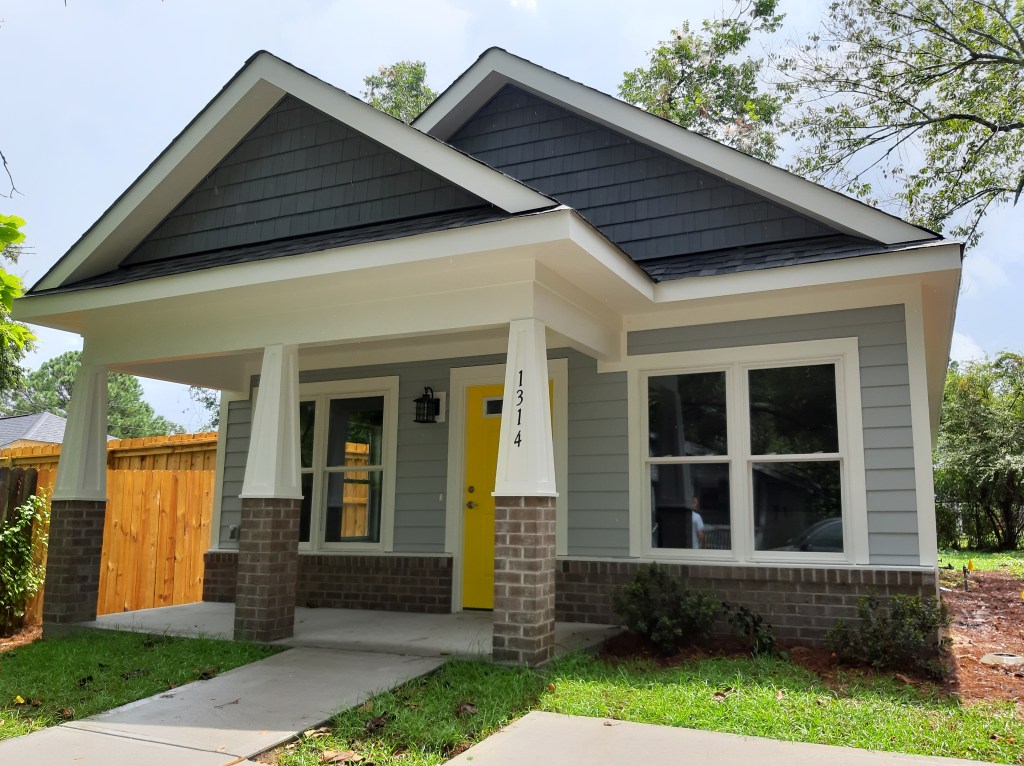
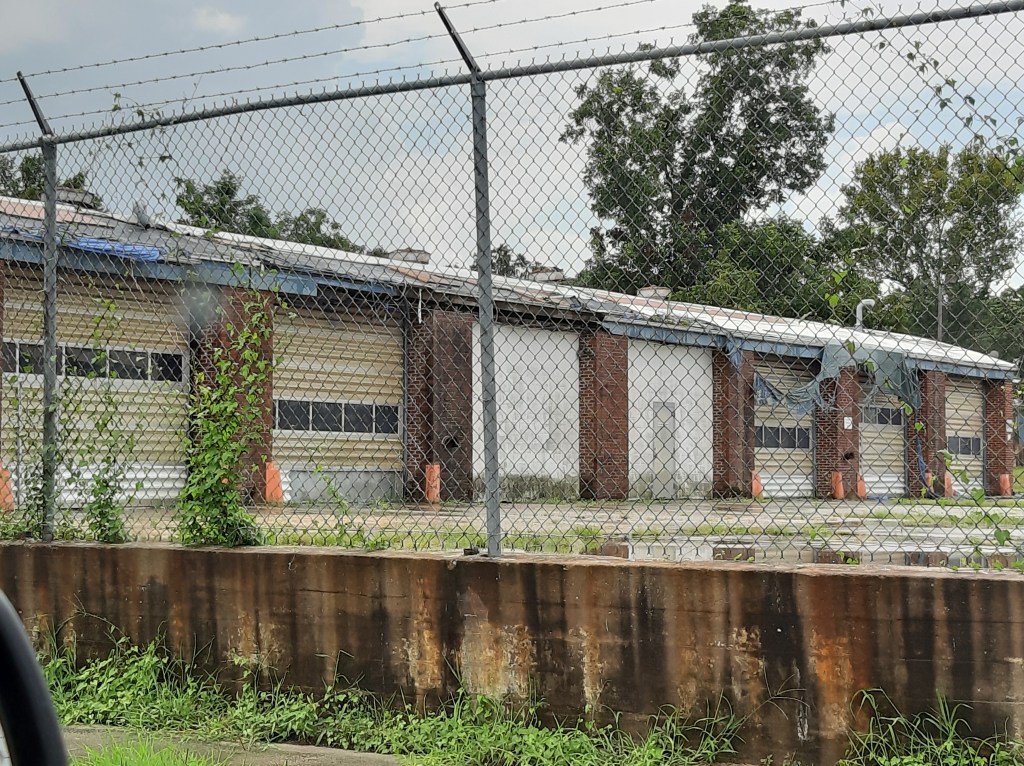
new build Marsdon Avenue, awaiting occupationNew Partnerships. Prospective development on derelict brownfield.
….As thud, thud, thud and a front tyre deflated (almost instantly). Paul did not miss a beat, confidently finding all necessary tools (turns out he was searching for them as he’d not had to change a tyre on this vehicle). And they were well hidden. All over the place. At times it did appear he was being eaten by a hungry Silverado…it’s a big vehicle.
I borrowed his daughters mini sized umbrella and sat helpfully on the pavement, thankful I wasn’t being asked to maneuver a Chevy tyre half my size, assuring a passerby I did not have a spare cigarette (nor was in need of one) and wondering what the gods of fortune had in store for me tomorrow.
And the recording App? Hilarious. IT may be over-rated but it’s entertaining. “I’m having a good time chewing things on Mars”…did I really say that?
And I know I didn’t say ” This room has a Conservation Board, they won’t kill you”… This recording app is definitely taking more of an effort to be creative than I am…
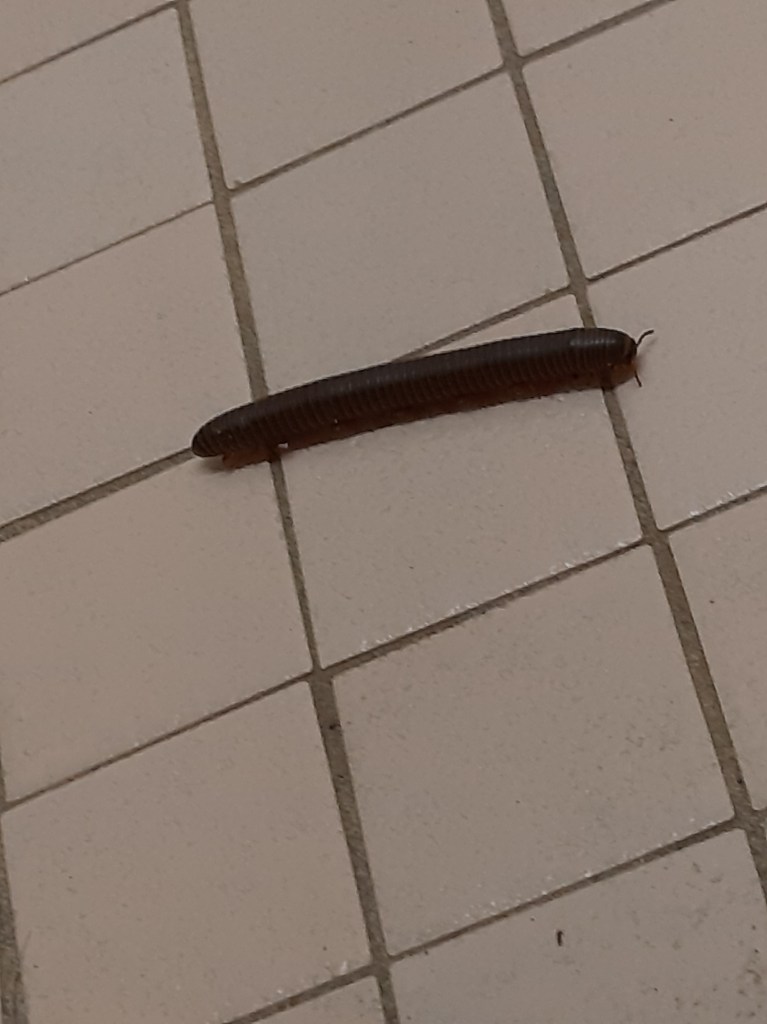
After a long tortuous journey and many personal “firsts”, let’s backtrack to the beginning. Time has glossed over nearly every delay, multiple airport cat-naps, the giant millipede and the tent in the tree incident…
North Carolina, the Tar heel state, with a median family income of $65,964 in 2017 (about £ 54,250).
Where I discover how hard it is to define UK Housing Association status (not-for-profit, private entity, charity, public, there are as many models as in the Community Land Trust field), and the housing prospects in the Yorkshire Dales “sounds dismal”. Must use more inspiring statistics in the future. Though I think that’s the point of my mission…
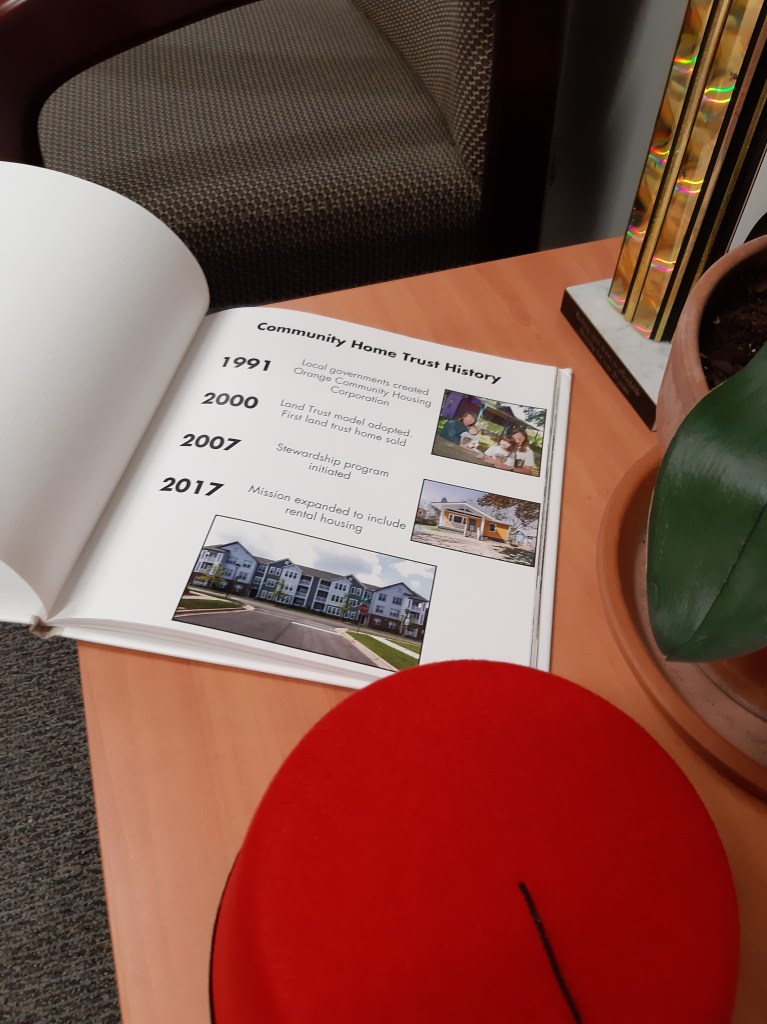
Robert Dowling, Executive Director of Community Home Trust (CHT) , was the first to respond positively all those months ago, when I was trying to persuade Land Trusts in the USA that I was not a “spam” email, or an investor. He has led the Land Trust, covering three counties, since it’s inception in 1999. Patient and softly spoken he succinctly kept me on track through my jet-lag.
The Community Home Trust “model” is evolving and always adapting to demand and need; no-one should live in squalor. From home ownership within communities to meeting rental demand. Current initiatives are exploring how improvements to ownership properties might be incentivised, so that owners want to invest, rather than have to at the point where they try to sell.
The Trust owns both land and home. If not being used for rental, the house is sold with 99 year renewable leasehold interest, the Trust retaining the deed.
In 2007 the Stewardship Programme was introduced to ensure the ownership properties were kept affordable and in good condition in perpetuity. So for c 210 homes there is a “forced savings” against depreciation and replacement of 5 high cost items in order to keep the homes as well maintained community assets.
Since 2012 the resale formula has been indexed to the Housing and Urban Development income statistics for the area. Homeowners can earn up to 1% appreciation per year on their property if they resell. Of course the longer the owner stays, the better the return – the equity.
CHT started small, first home selling in 2000. By 2005 organisational growth was driven by the inclusionary housing policy, and CHT had sold 100 homes. The main method of acquiring land is now through inclusionary housing led by private developers. That’s not to say CHT has not dipped into putting homes on the ground, but its fraught with “all sorts of peril”. Looking back, the advice would be to never use the lowest bidder, it makes no sense. This sentiment will be echoed across England I suspect.
Some people are not meant to be home-owners and that too makes sense. It’s having the choice, based on personal/financial goals, that’s important. Having home options; housing choices for all income levels, families and stages of life.
The climate in North Carolina is humid and sub-tropical, which is challenging on wooden materials. Certainly property maintenance and keeping the community asset in good condition appears to be one of the key issues for the Trust.
I emerged out of air-conditioning into 34 degrees C, with what must be close to 90% humidity, melted and reflected…
A beginning is the end of something, a new start. Homes are not typically viewed as a community asset; (63% in the UK are in private hands!). However they are the most important community asset along with it’s residents that a rural village can have.
Next: Where the undertaking takes more effort than necessary. And I’m not talking about extracting the tent from the tree.
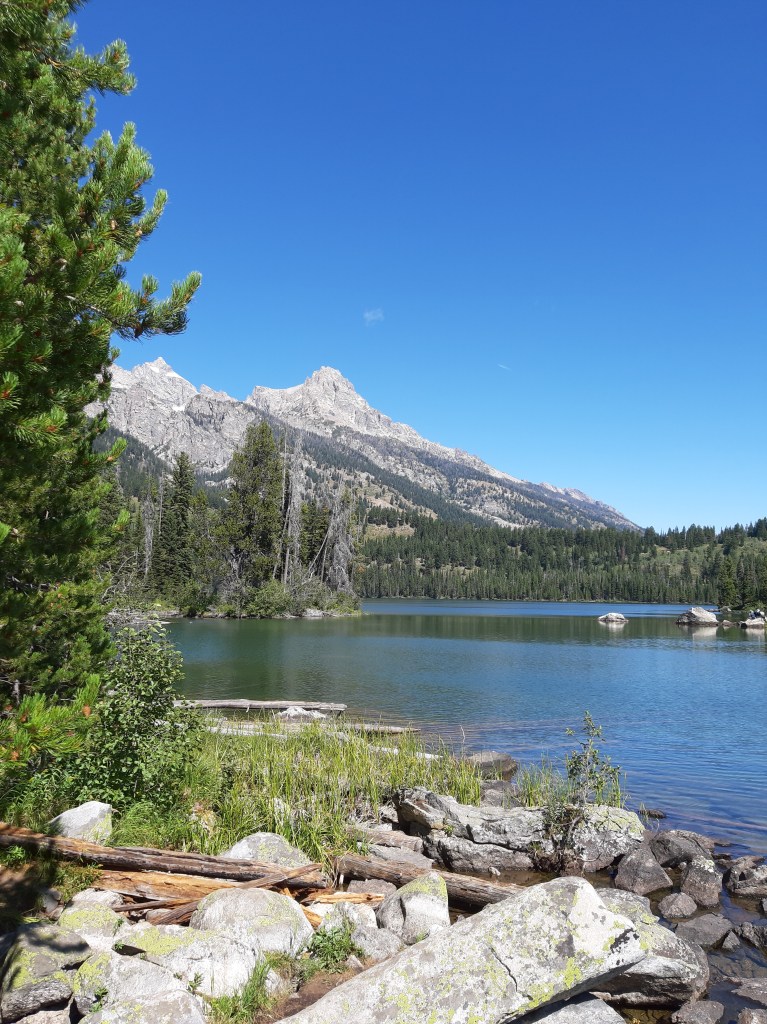
Its Monday – bank holiday back in the UK. I’m taking half a day to re-centre before leaving Wyoming and the Grand Teton (pronounced “teeton”) National Park, and having a gentle hike around Taggart Lake and beyond.
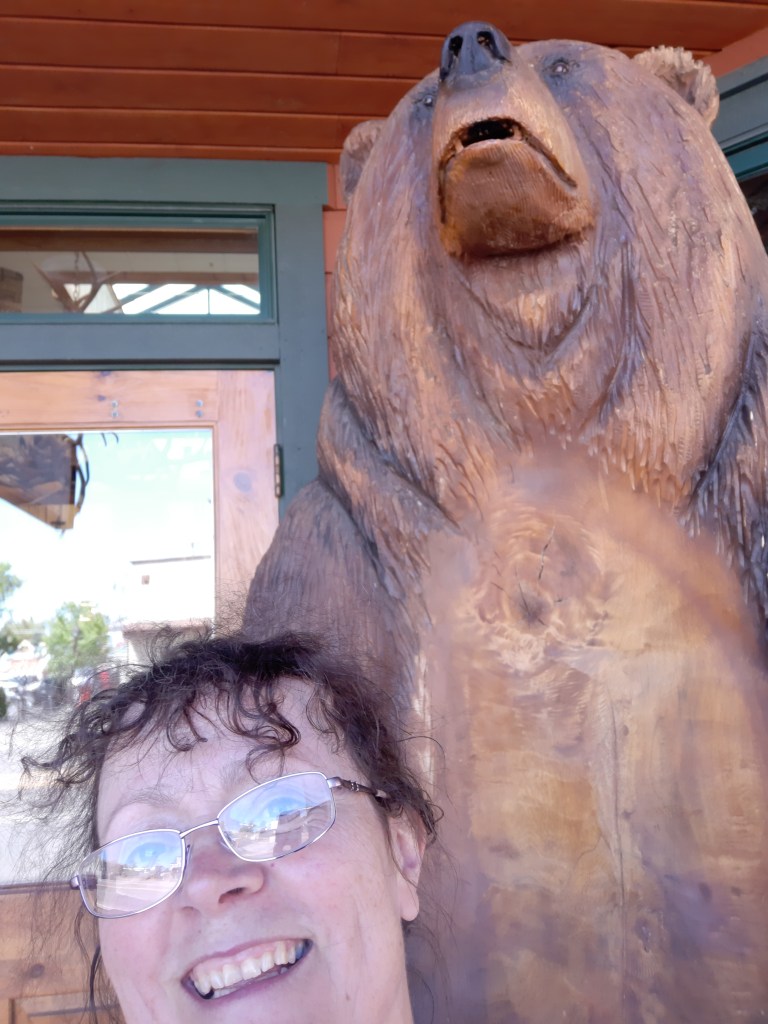
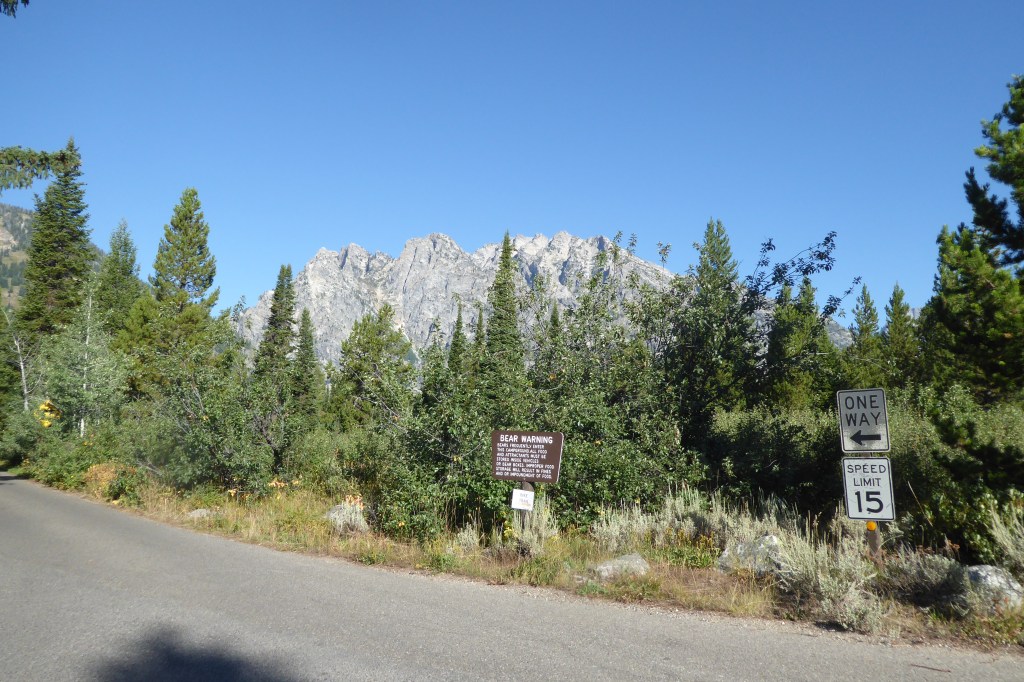
The Park Authorities (rightly) make a big thing about bears here. There are c 60 Grizzlies and 100 Black bears in the Park and nearby National Forest.
Bear warnings
Everywhere people congregate there are
signs on bear safety:
Never hike alone. Ahem, sorry lone
travellor, so I am hiking alone, however I’d like to think I’m a
little more savvy than most to being aware of my surroundings and
what’s going on.
When you hike, talk, clap, make a
noise. Notice no advice on hitting two sticks together…it’s not
mountain lion country here (no, I’ve no idea if that works either).
This goes against all my childhood training; you will not get far
bird-watching if you make a noise all the time as you scare
everything away. With bears I guess that’s the point. Talking isn’t a
problem, I can have an argument with myself. I pass this one ok.
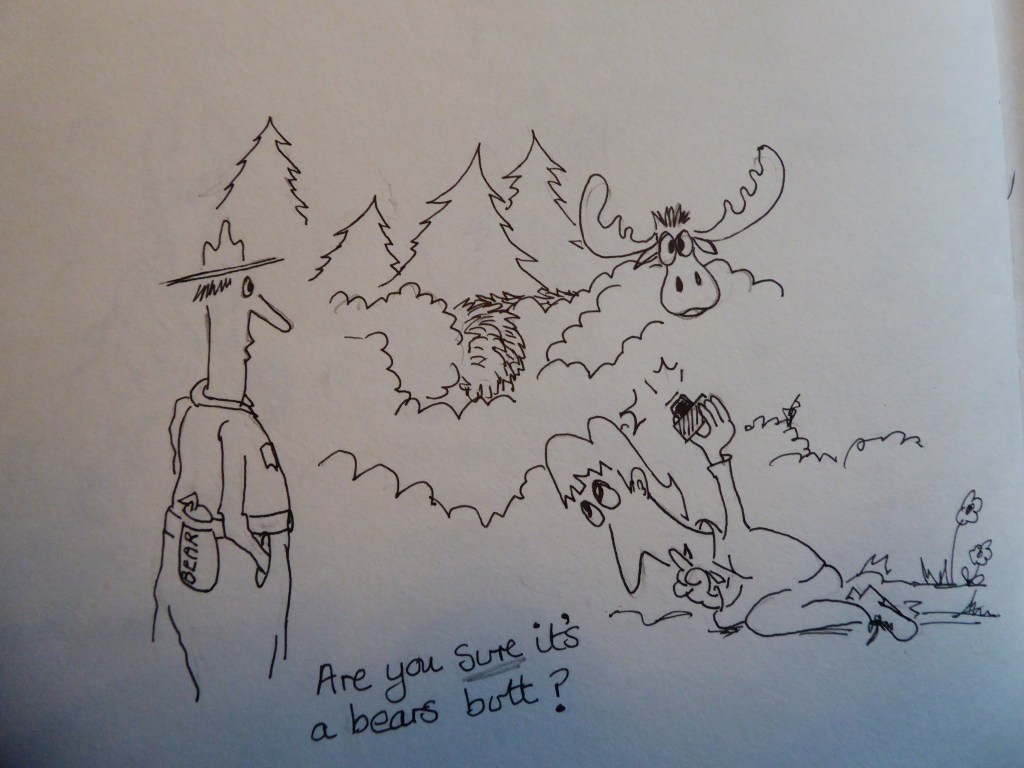
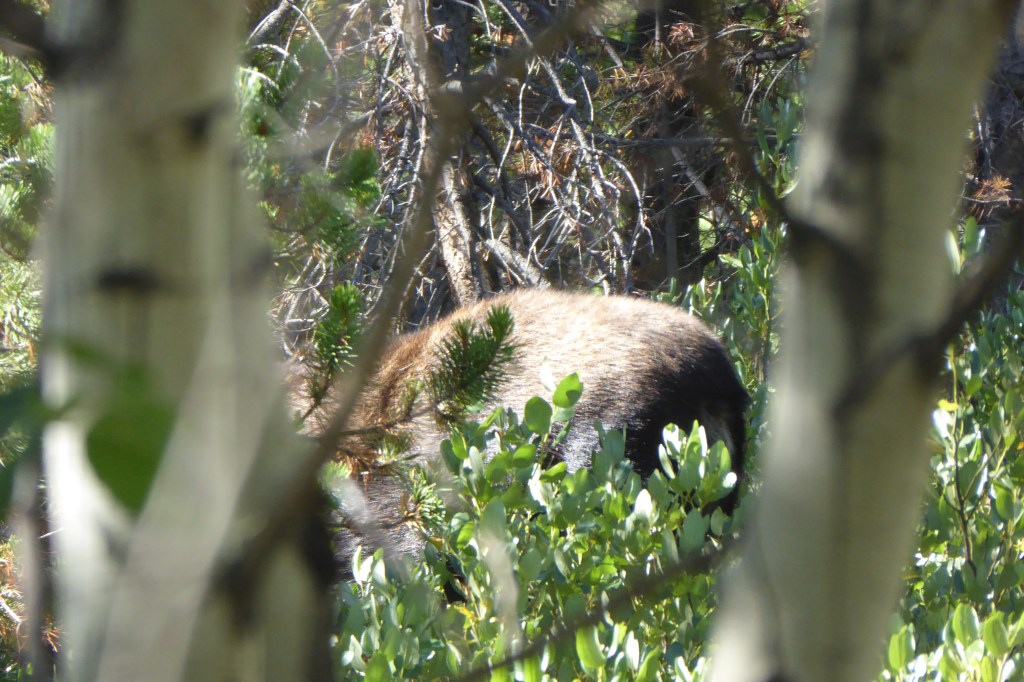
If you see a bear (before it see’s you), back away slowly. That’s easy for you to say. Fight or flight mode has a lot to answer for. As I round a corner and spy in the huckleberry bushes a dark, thick furred backside not 10 feet away, I could feel the blood rushing (largely away from my brain and into my feet). To my credit I did start backing – no particularly slowly…then noticed the furry butt was attached to a long neck. Ahhh…moose butt, not bear butt. Moose can still get kind of cranky around people, but at least they won’t eat you after trampling you. Yes, there is a picture of moose butt.
Now come on, easy mistake to make, could be bear butt…
Be aware of your surroundings. Again
easier said than done, my eyes go in one direction only. As I face
planted the trail for the second time I decided to use my ears to be
aware of my surroundings, listen for squirrel or chipmunk alarms, and
keep my eyes firmly on the rocky path.
Carry Bear Spray. Now that appealed to
me for all the wrong reasons. I’ll admit I think it looks cool,
carried holster like, the new “old” wild west. This is for aiming
at the bears feet if they charge at you. Parents, it is not for
spraying on your children to protect them from bears.
As I made my way back after only 10
miles, I heard approaching in the distance the sound of bells. Goats?
(I’ve been to Europe), dinner bell? Morris Dancers? (I am from
England after all). A lone hiker strode into view accompanied by the
tinkling sound of bells. The jury is out on the effectiveness of
bells vs bears. It certainly roused my interest.
I decided after my short hike (emerging
alive from the lodgepole pine forest), it is all a question of
perspective. Since I have been here I’ve seen 5 Moose (this includes
the Moose butt). There are 70 Moose in the Grand Teton. And 160 bears
or thereabouts. The odds are that I have passed at least a couple of
bears and not even known about it. I’m a rubbish hiker.
What has any of this got to do with
Community Land Trusts, I hear you ask? Bear with me (get it?…never
mind…). It’s culture and heritage. Ask any tourist here (and yes, I
have), what they most want to see – it’s bears and moose. They come
for the wildlife experience. Not too wild, as in the flight or fight
wildlife experience, just wild enough to feel close to nature. The
wildlife heritage draws them into the mountain trails.
Why do people come to the Yorkshire
Dales? For the culture and heritage, simple as that. The views,
criss-crossed with dry stone walls, and dotted with barns; the land
management (whether they know it or not) sheep being herded down the
main street, cows halting the traffic on their way to milking, or the
colourful swathes of meadow grasses; the welcoming hearths of the
pubs and that one local waiting for you to buy him (or her!) a pint
in exchange for tall tales of Dales Life. The agricultural shows,
sports days, festivals.
The Yorkshire Dales National Park, when
you get right down to it, was designated on the heritage and culture
of generations of people living and working the land. The landscape
is a working one. Without people living and working there, the
culture will quickly go. It’s happened and is already happening
across lots of the villages. The obvious losses – school, shop,
pub, the less obvious ones – residents, people who live and
interact and create that sense of community. The people you want to
share your woes with, the people who will help you if you need it,
the people you can’t wait to tell your good news to. Community.
I think I am homesick.
Community Land Trusts can be part of
making that happen, protecting land for the community in perpetuity,
ensuring heritage and culture evolves, remains vibrant. The bare
truth is, it’s time to protect our communities, and in doing so we
will protect the future heritage.
Nearly two weeks in and still now news from me? It’s not from lack of wanting to shout about it. 24hrs in saw a complete IT failure….epic…or in the words of a tech guy I visited , “Woow, it’s like you are homeless…”. He knew how I felt.
But my plans were laid, places to be, people to meet, talks and events to attend. No time to stand and stare. Or reinstall Windows. Or contemplate if I had enough paper to write notes on.
Today is a “gap” day. AKA I am driving for 4 1/2 hrs to Idaho for a meeting in the morning. I figure (I’m beginning to pick up American phrases without realising), I have a spare 3 hours to spend with the Computer Clinic in Jackson Hole, to see if they can solve the IT (after they’ve stopped laughing). Best laid plans see. Nothing can go wrong. Of course this may be my last blog post (I’m using their laptop/internet).
Don’t make plans is the thought for the day. Just get on with it. And always carry some paper and a pencil. And maybe a towel.



 On a Mission - learning from the CLT Movement